
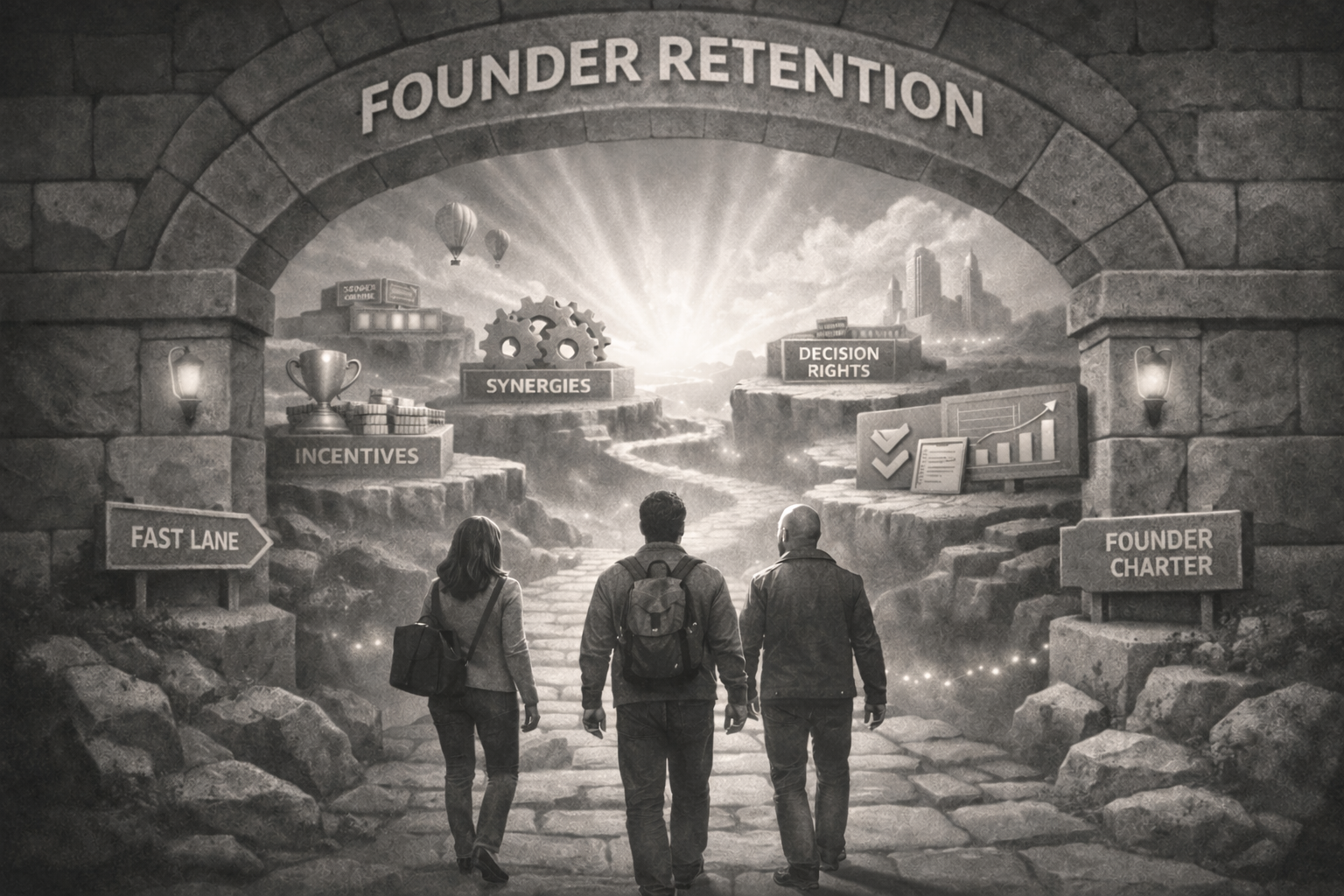
Keeping Founders Engaged After a Bolt-On Acquisition
Bolt-ons fail when founder retention gets treated like culture, instead of operating design. After close, decision rights blur, speed slows, and founders get measured on outcomes they cannot control, which turns motivation into resentment.
This piece lays out why founders disengage, what different founder archetypes need to stay effective, and how to design the post-close system so the deal rationalize is realized.

Competitor Acquisitions: The Migration Playbook
SaaS consolidation is accelerating, not because it’s fashionable, but because it’s practical. With many assets trading at 3x to 5x revenue and organic growth harder to manufacture, investors are leaning on consolidation to create scale, take out cost, and build credible AI capabilities on top of larger install bases.
But competitor acquisitions don’t succeed in the model. They succeed in migration. Retention, timing, and cost discipline matter more than headline synergies, especially when AI raises the penalty for split platforms, fragmented data, and delayed unification.
This piece lays out a practical playbook for migrating customers without destroying value, why some churn is not only inevitable but rational, and how front-loading migration thinking in diligence leads to better deals, better execution, and more believable valuations.

AI-Ready M&A: How Acquirers Should Evaluate AI Compatibility
Most AI vendors can produce a great demo. The real question is whether their underlying product, data, and engineering foundations can support AI at scale inside a larger platform. Learn how to spot the difference between "demo-ready" and "AI-ready" before you sign the LOI.

How to Build a Repeatable M&A Engine That Increases Enterprise Value for SaaS
Most SaaS companies talk about M&A as a one-off decision. The ones that consistently create enterprise value treat it as a repeatable operating model. This article breaks down how leading platforms build disciplined, programmatic M&A engines that compound value over time. It lays out a practical operating model spanning strategy, sourcing, evaluation, SteerCo governance, integration, and early success metrics. The piece also clarifies the roles of the CEO, CPO, CFO, CRO, and Corp Dev leader, and highlights where most companies succeed or fail.

How to Re-Rate Your Pre-AI SaaS Assets into AI Valuations
SaaS multiples have reset, but AI multiples haven’t. Many SaaS platforms bought during the 2017–2021 cycle still have strong cores. They’re just stuck in a market that is now rewarding the next technological shift of AI, and the economics it represents. This piece lays out a practical, investor-focused playbook for identifying which assets can evolve, how targeted AI-led acquisitions accelerate that shift, and why decisive product and architectural transformation is the only path to re-rating into the AI valuation cohort.

Build vs Buy: The Hybrid AI Strategy Reshaping CX
As AI reshapes customer expectations and compresses product cycles, most CX vendors are being pushed into a critical decision: build AI internally or buy it. The truth is that neither path works on its own. This post breaks down why a hybrid model is emerging as the most realistic way forward.